The history of Dutch
Dutch might sound unfamiliar at first, but it is more closely related to English than you might think.
This page looks at where Dutch comes from, how West Flemish fits into the picture, and a few fun facts to break the ice at your next taalcafé.
Overview
Newcomers are sometimes surprised by how much importance Belgians in Flanders attach to the Dutch language. To understand why, it helps to know a little history - because for a long time, Dutch speakers could not use their own language in their own country.
One country, three official languages
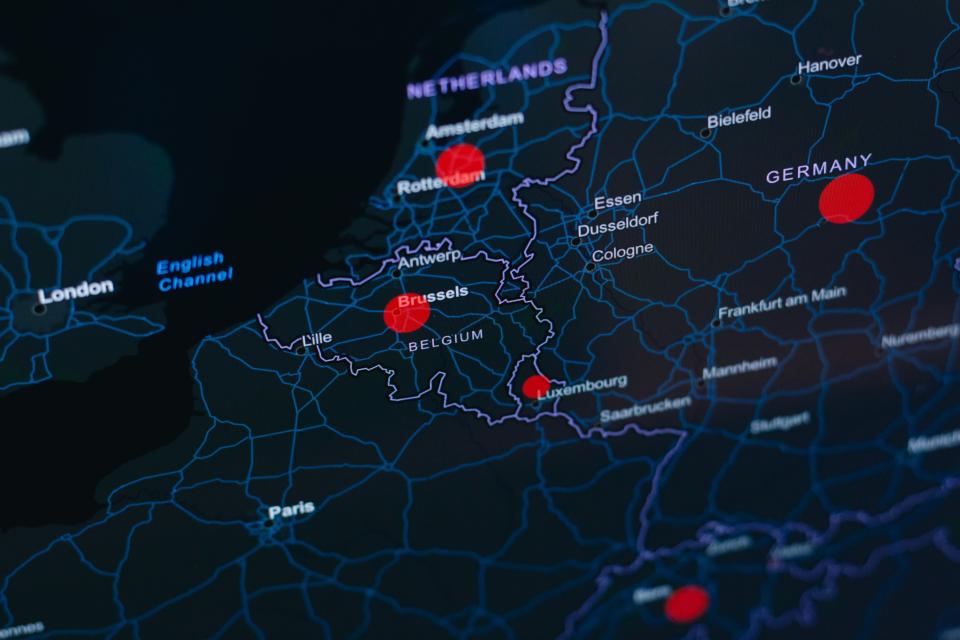
Belgium has three official languages: Dutch, French, and German.
- Dutch is the official language of Flanders, the northern region, and is spoken by about 60% of Belgians.
- French is the official language of Wallonia, the southern region.
- German is spoken by a small community in the east of the country.
- Brussels is officially bilingual: Dutch and French.
Which language is used in schools, government offices, and official documents depends on where you are — not on personal preference. In Flanders, all official life runs in Dutch.
Dutch in early belgium
When Belgium became independent in 1830, the majority of its population spoke Dutch. Yet French became the language of public life: of government, law, higher education, the army, and the upper class — in Flanders too.
For Dutch-speaking Flemish people, this meant that much of public life took place in a language other than their own:
- In school, education beyond the basic level was in French. A Flemish child who wanted to continue studying had to do so in a language rarely spoken at home.
- In church, services were held in Latin.
- In court, proceedings involving Flemish defendants could be conducted entirely in French.
- In the army, Flemish soldiers — including those in the trenches of the First World War — often served under French-speaking officers.
Dutch was seen mainly as the language of everyday life, not of law, science, or culture. For many, social advancement went hand in hand with switching to French.

The long road to equality
Change came gradually, driven by the Flemish Movement (Vlaamse Beweging), which worked for decades to give Dutch a full place in public life:
- 1873–1883: first language laws allow Dutch in criminal courts, administration, and secondary schools in Flanders.
- 1898: the Equality Law (Gelijkheidswet) finally recognises Dutch as an official language equal to French — nearly 70 years after independence.
- 1930: Ghent University becomes the first Dutch-language university in Belgium.
- 1962–63: the language border is officially fixed, establishing the principle that each region functions in its own language.
This history is not ancient: the grandparents of today's Flemish adults grew up in a Belgium where Dutch was still fighting for its place

What this means for you today
This history explains something you will notice in daily life: language in Flanders is not just practical, it's tied to identity and hard-won rights. That's why official services, schools, and public institutions in Flanders operate in Dutch - and why making an effort to learn it is so warmly appreciated.
Good to know: you don't need to be fluent to make a difference. A simple dank u wel or goeiedag signals respect for the local language and culture, and opens more doors than you might expect. And if you want to go further, there is a wide range of Dutch courses for newcomers — see our page on Dutch courses in west Flanders.
Sources
- Drie officiële talen, taalgebieden, ~60% Nederlandstalig — Languages of Belgium (Wikipedia)
- Taalwetten 1873–1883 en territorialiteitsbeginsel — Taalwetgeving in België (Wikipedia)
- Gelijkheidswet, 18 april 1898 — Encyclopedie van de Vlaamse beweging
- Vernederlandsing UGent, 1930 — UGentMemorie
- Taalgrens vastgelegd 1962–63 — BRIO Brussel
- WOI en taal in het leger — Encyclopedie van de Vlaamse beweging en VRT NWS
- Vlaamse Beweging en verfransing — Historiek.net
you should know