Universities & colleges in West Flanders
Working out which institution offers the programme you need can feel like its own research project when you are new to the region. West Flanders has a smaller but genuinely varied higher education landscape, spread across several cities.
This page explains the difference between the academic and professional institutions here, what each generally focuses on, and what to check before choosing between them.
Overview
Your choice mainly comes down to whether you want an academic, research-oriented path, a practice-oriented one, or a highly specialised postgraduate route, and which city fits your plans best. Language of instruction is also worth checking early, since Dutch remains the default for many programmes.
Academic universities
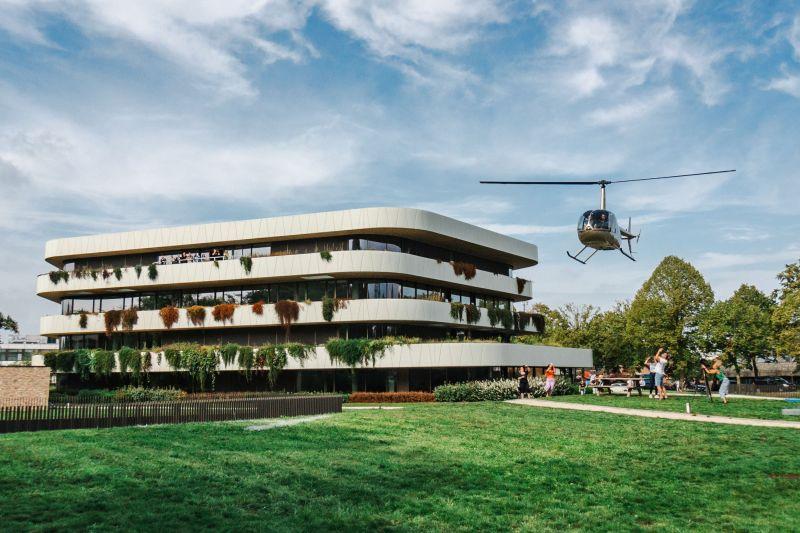
KU Leuven runs a smaller-scale campus in Kortrijk, known as Kulak, built around close-knit teaching combined with active research - a deliberate contrast to studying at KU Leuven's much larger main campus in Leuven.
KU Leuven also has a campus in Bruges, home to the Faculty of Engineering Technology: a bachelor's in industrial engineering (industriële wetenschappen) followed by master's tracks in electromechanical engineering, electronics-ICT and energy. Alongside teaching, the campus runs active research groups and innovation labs — among them ProPoLiS (polymer processing and innovative material systems), The Ultimate Factory and The Ultimate Machine — and hosts a large share of KU Leuven's international PhD researchers in the province. KU Leuven in Bruges
Ghent University (UGent) also has a campus in Kortrijk, but it is narrower in focus: it specialises in industrial engineering (industriële wetenschappen), including a shared first year followed by specialised bachelor's tracks such as machine and production automation and industrial design, taught in small class groups with well-equipped labs.
Applied sciences university colleges
- Howest, the University of Applied Sciences for West Flanders, with campuses in Kortrijk, Bruges and Ostend, focused on professional bachelor's programmes in fields such as digital media, technology and business
- VIVES, one of the largest universities of applied sciences in Belgium with over 20,000 students, spread across seven campuses in five West Flanders cities - Bruges, Kortrijk, Ostend, Roeselare and Torhout - covering six fields of study: applied engineering and technology, applied social studies, biotechnology, commercial sciences and business management, education, and health care

Specialised postgraduate institutions
The College of Europe has a campus in Bruges dedicated entirely to postgraduate study in European affairs, alongside its sister campuses in Warsaw and Tirana. It is highly selective, admitting around 350 students a year from over 50 countries into small-group master's programmes such as European Economic Studies, EU International Relations and Diplomacy Studies, European Law, and European Political and Governance Studies.
This is not a route into a first bachelor's degree - it is for students who already hold one and want to specialise specifically in European affairs. Applications also run on a much longer lead time than a typical university programme: the College generally opens applications around a year before the academic year starts and closes them early, so this is worth planning for well ahead of a normal application timeline.

Choosing between them
Academic universities generally suit a research-oriented path, especially if you are aiming for a master's degree or further studies afterwards.
University colleges are built around practice-oriented programmes tied more directly to a specific profession. Keep in mind that UGent's Kortrijk campus only covers industrial engineering, so if your interest lies elsewhere academically, KU Leuven Kulak or a university college is more likely to have what you need.
Beyond that, check the language of instruction for your programme specifically - Dutch remains the default at most institutions, though English-taught options exist and vary by programme and academic year. For how institution types, qualifications, grading and credits work in general, see our The Education ( +18 y.o ) page.
Good to know: contact the admissions office of the specific institution you are interested in for the current list of English-taught programmes. This changes from year to year, so a general overview like this one will not stay accurate for long.
Sources
- KU Leuven Kulak
- Ghent University Campus Kortrijk
- Howest
- VIVES
- College of Europe
support for studying