Registering your car
Getting a car road-legal can look completely different from what you are used to back home, especially if number plates, insurance and inspections are handled by separate authorities there. In Belgium, most of this runs through one central system.
This page covers whether you can keep driving on your foreign plates, registering your car with a Belgian number plate, what differs between EU and non-EU imports, the insurance you are legally required to have, and passing the technical inspection where it applies.
Overview
Whether you brought your car with you or bought it in Belgium, three things need to be in place before you can legally drive it: a Belgian registration, valid third-party insurance, and, depending on your vehicle's age, a passed technical inspection.
These three are linked - you generally need proof of insurance before you can register your car, and proof of registration before you can book your inspection.
Can I keep driving on my foreign plates?
Short answer: no. Once you are a resident of Belgium (registered at your municipality), you must register any vehicle you drive here with Belgian plates - even if it is still validly registered abroad. There is no general grace period, so plan the registration as part of your arrival formalities.
A few specific exceptions exist, each requiring the right paperwork in the car:
- A company car provided by a foreign employer, used mainly for work (signed employment contract on board)
- A car used by a foreign student during their studies in Belgium (certificate from the school on board)
- A rental car from a foreign rental company, for a maximum of six months (signed rental contract on board)
- A car lent free of charge for up to one month (dated declaration from the foreign owner on board)
Outside these situations, driving on foreign plates as a Belgian resident can lead to fines and problems with your insurance coverage.
Bringing a car from an EU country
Moving a car from another EU country is relatively simple - no customs duties, no import VAT on a car you already own:
- Customs formality - the car must still pass a (digital) customs check to receive the e705 clearance, which the DIV needs before registering it
- Documents - bring the foreign registration certificate and the Certificate of Conformity (COC) proving the car meets European standards
- Inspection - a used car imported from abroad must pass the technical inspection before it can be registered

Bringing a car from outside the EU
Importing from outside the EU involves customs clearance, and normally 10% import duty plus 21% VAT on the car's value. But if you are moving your household to Belgium, you may qualify for the removal goods exemption (verhuisgoederen) - no duties or VAT - if, broadly, you lived outside the EU for at least 12 months, owned and used the car for at least 6 months before moving, and keep it for personal use for 12 months after import. Always confirm your eligibility with Belgian Customs (FPS Finance) before relying on this exemption. After customs clearance (the e705), the process continues like any other registration.
Registering with a Belgian number plate
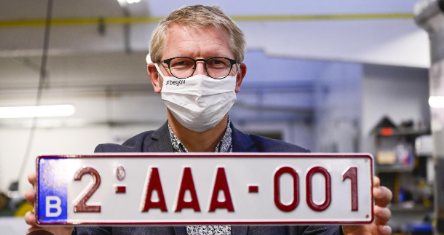
Car registration in Belgium runs through the Vehicle Registration Service (Dienst Inschrijvingen Voertuigen, known as the DIV). In practice, your insurer usually submits the registration for you once you take out insurance. Once your registration is processed, you receive a Belgian number plate and a registration certificate for the vehicle.
Registering a car also comes with taxes:
- A one-off registration tax (BIV - belasting op inverkeerstelling), which depends on your vehicle's characteristics rather than a fixed amount - use the official calculator of the Flemish Tax Administration to check what applies to your car
- An annual road tax (verkeersbelasting), billed automatically once the car is registered
If you are bringing a car with you from abroad, check Bringing car, pets and belongings page before you start the registration itself.
Mandatory insurance
Before you can register a car, or drive it at all, you need valid third-party liability insurance (burgerlijke aansprakelijkheid, often shortened to BA). This covers damage you cause to other people or their property, and it is a legal requirement rather than an optional extra. For a fuller look at choosing a policy and what other cover is worth adding, see the Insurance page.

Technical inspection
Depending on your vehicle's age and type, you may need to pass a technical inspection (autokeuring) - a check that your car meets Belgian roadworthiness standards. This applies before registering a used car (including cars imported from abroad), and periodically afterwards for most vehicles. The exact intervals and requirements depend on your vehicle, so check the official pages for the current rules before you book an appointment.
Good to know: get your insurance sorted before you try to register your car, and your registration sorted before you book your technical inspection. Doing these out of order is one of the most common reasons registration gets delayed. And remember your driving licence is a separate matter - non-EU licences must be exchanged within a set period
Sources
- Vehicle Registration Service
- Vehicle inspection - Flanders
- Vehicle inspection - Vehicle Registration Service
- Vlaamse Belastingdienst - BIV en verkeersbelasting
- FPS Finance - Customs, importing a vehicle