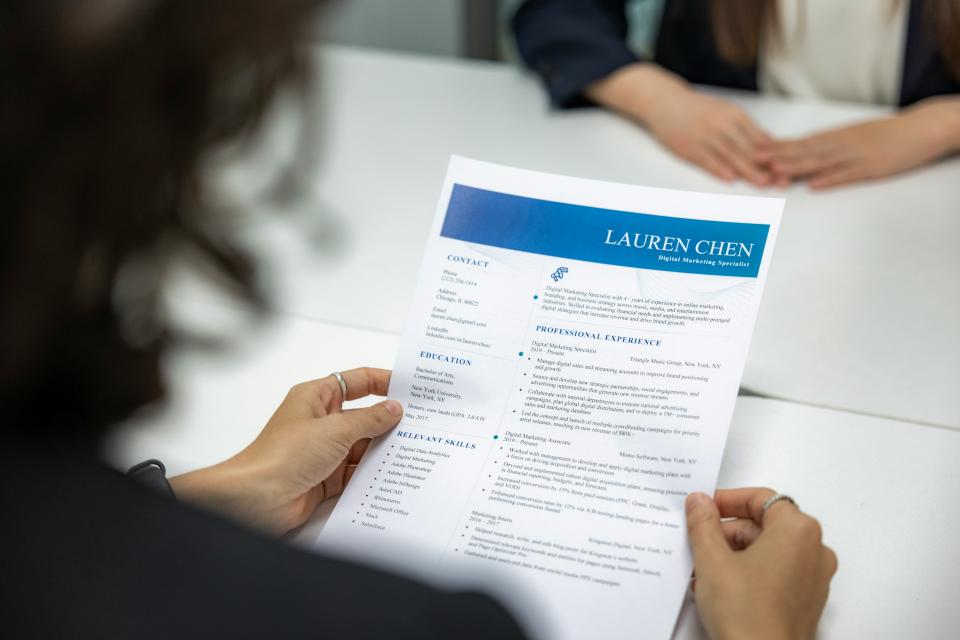
Writing a CV
A CV that works well in your home country doesn't always land the same way with a Belgian employer. Expectations around length, structure, and even whether to include a photo can differ more than you'd expect.
This page explains the local conventions, how to structure your CV, and what to consider around language.
Overview
Belgian recruiters generally expect a CV that's easy to scan and gets straight to the point: your experience, your qualifications, and your language skills. There's no single "correct" format, but a few local habits are common enough that following them will make your CV feel familiar to a Belgian reader rather than foreign.
Belgian CV conventions
Most Belgian CVs run one to two pages and list experience in reverse chronological order, most recent first. A professional photo in the top corner is still common practice here, even though it's optional and not something you should feel obliged to include. If you do add one, a simple, neutral headshot works best - this isn't the place for a casual or heavily edited photo.
Language skills deserve real attention on a Belgian CV. Belgium is a multilingual country, and being able to work in more than one language is often a genuine advantage, so it's worth listing your level in each language clearly rather than burying it in a skills section.
Structuring your CV
A clear, conventional structure tends to work best:
- Contact details and, optionally, a photo
- A short professional summary, a few lines on who you are and what you're looking for
- Work experience, most recent first, with concrete achievements rather than just task lists
- Education and qualifications
- Language skills, listed by proficiency level
- Certifications or other relevant training
References are generally not listed in full on the CV itself. Mentioning that they're "available on request" is enough.

Language considerations
Whether you should submit your CV in English, Dutch, or French depends on the employer and the role. For an international or English-speaking workplace, an English CV is usually fine. For roles that involve local clients or Flemish colleagues, a Dutch version can make a stronger impression, even if the rest of the recruitment process happens in English.
Good to know: if you're applying for multiple roles, it's worth having both an English and a Dutch version of your CV ready. Swapping in the right one for each application takes a few minutes and can make a real difference in how your application is received.
Sources
- VDAB