
FAQ
Administration

I just arrived, what should I do?
You can visit our webpage about CHECKLIST.
Practically, before coming to Belgium (especially as non-EEA citizen), you must follow these steps below.
In your home country:
- Apply for a Work permit (if coming with a job offer)
- Apply for a Visa (student, work, working holiday, etc.)
Once arrive in Belgium:
- Make an appointment to visit the city hall of your location (online or in-person) - The make-an-appointment must be done within 8 days, but the appointment itself can be later than that time frame due to administrative traffic in the municipality. Hand in documents at the city hall for your Residence Permit.
- Exchange Driver's License: Make a seperate appointment to visit the city hall. CHECK HERE for your eligibility to exchange. Sometimes, a translation of original license is also required upon the application. For official translators, you can VISIT HERE. Be aware tha driver's license translation can cost up to 100 euro per piece.
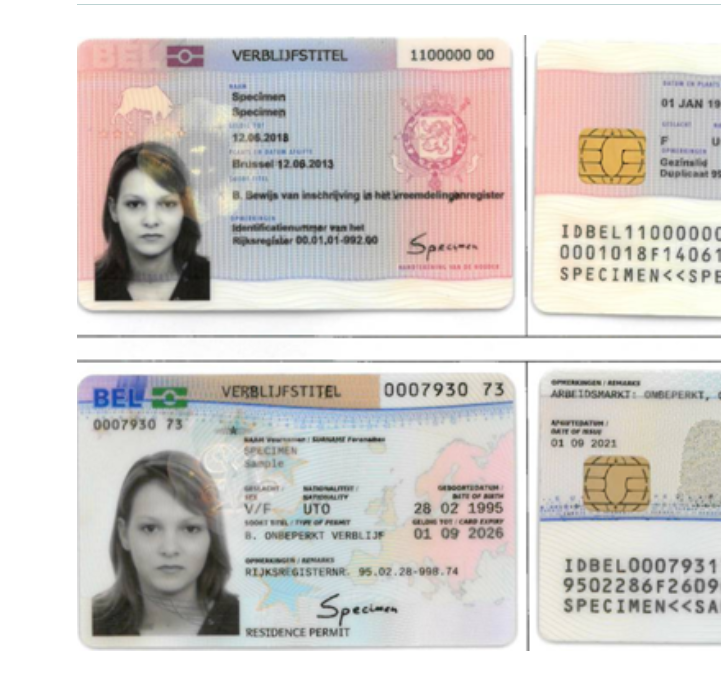
- Wait for the police-visit: You will receive the official approval of your Residence Permit application through mail. Then you can pick up the card at the city hall (with or without appointment depending on per location).
- Download Itsme: Once you have a national number (rijksregisternummer), you can download the app "Itsme" on your phone and build a profile for your digital identification. This is required for many procedures in Belgium, the Netherlands, and Luxembourg.
- SIM card and Internet Connection: Secure your phone network by visiting telenetwork stores physically (Orange, Proximus, Telenet) or booking SIM cards and WIFI machines online (BASE, Mobile Vikings)
- Set up Bank Account: Make an appointment with local banks (KBC, Crelan, BNP Paribas Fortis, Belfius, ING Belgium) to set up an account. This can be done with only your visa number. Once you receive the Residence Permit, you must return to the bank and inform them about the official ID number you receive in Belgium.
- Contact a local insurance company: Set up your personal profile. Do you need to join a health insurance? CHECK HERE.
Once settle in after the very few weeks:
- Contact Dutch courses provider: university language centers, CVO (in most Flemish cities), SNT (in Bruges) to arrange courses. If you are invited to the integration courses directly upon arrival, this will be arranged by the local authority. You will be given more instruction then.
- Understand the landscape in your area: Visit supermarkets (Lidl, Albert Heijn, Delhaize, Colruyt, Aldi, Carrefour, etc.), pharmacies, post offices, etc. One special thing to note is that the garbage bags in Flanders are assigned per city. To throw away your garbage, you must check which colors of bags are specified for your city of location and the time of collection. These bags can be purchased at the supermarkets. You either have to ask for them at the counter or find them on the stacks. If you do not follow the schedule to leave your garbage out, you could recieve heavy fine for this. Similarly, if your bag is not correct, the cleaning company will also not take your trash away. READ HERE for more information.
- Transportation: Search for a bike (new or second-handed) and purchase a good-quality rain jacket for the unexpected weather in Belgium.
All the rest come with your daily experience! Hop into a local restaurant and try some "stofvlees" (stewed beef) or "vol-au-vent" (creamy chicken puffy pastry), and what's more? A full plate of "frietjes" (Belgian-styled fries).
Check some practicalities in your area and finally join us at our regular social EVENTS in Kortrijk, Bruges, and Roeselare!
Where should I register after arriving?
You must register at the city hall of the city where you live, ideally within 8 days of arrival.
If not possible within 8 days (in most big cities), proof of appointment or contact can also be used to justify.
Kortrijk: visit Stad Kortrijk
Bruges: visit Stad Brugge / Huis van de Bruggeling
Roeselare: visit Stad Roeselare
Do I need an appointment to the city hall?
Generally speaking, yes, and you can make an appointment online through their official website.
Some procedures might not require prior appointment such as picking up documents and permits. In these cases, you will be informed through mail and have to wait upon arrival.
Make an appointment in the City Hall of Kortrijk
Make an appointment in the City Hall of Bruges
Make an appointment in the City Hall of Roeselare
"Maak een afspraak" is translated to "make an appointment". From there, according to your request topic, you have to click on different lists. In case you cannot find your subject due to language barrier, you can CONTACT US for further support.
What is the "National Number" (rijksregisternummer)?
The RRN (Rijksregisternummer) is your personal ID number in Belgium.This serie of numbers belongs to you even if you renew your document later on. You receive this number after registering at the city hall and applying or having a Residence Permit card. This number is needed for most services such as banking, healthcare, ITSME (national digital identity system).
Something to note is that the process of acquiring a residence permit can sometimes take up to a few weeks or over a month, depending on the commune, agreement between countries, and your specific situation.
What is Itsme?
Itsme is a secure, free smartphone app for digital identity, acting as a single, simple login (using your phone, app, and a PIN) for various online services in Belgium, the Netherlands, and Luxembourg. It links your eID data with your phone for high security, ensuring only you can access your digital life.
- Secure Login: Replaces usernames/passwords for banks (KBC, ING), government sites (taxes, pension), and healthcare portals.
- Confirm Transactions: Authenticates payments and actions with a simple PIN approval.
- Sign Documents: Provides legally binding electronic signatures.
- Register & Subscribe: Quickly creates accounts or subscribes to services.
Should I learn Dutch or French first? Can I just stick to English?
In the region of Flanders (including West-Flanders), Dutch is the official language used in daily life and municipal services. Additionally, local people also tend to use their regional dialect (West-Flemish) in casual conversations. This dialect is, however, not an official written language that you can learn in standard courses.
Generally speaking, most Flemish people do speak English. Therefore, simple tasks can be done in English and French. However, the local authorities and governmental institutions are required to use Dutch for their documents and information. From 2026 on, the Dutch language requirement within integration courses of international citizens in Flanders will also be emphasized (B1 required for nationality), even more than our current policy.
To integrate better in the local community, we always suggest to take at least some basic levels of Dutch courses while French can be an optional bonus. As for the local dialect, most individuals have to learn it through day-to-day contact with colleagues and local friends.
Can I work in Belgium as an international?
In short, EEA (European Economic Area) and Swiss citizens can work freely in Belgium. Non-EEA nor Swiss nationals must have a work permit (the Single Permit) or combined permit to legally work and get paid in Belgium.
Depending on your permit status (as a student or full-time worker), you are entitled to different working rights in Belgium. This can be found on your Residence Permit card, too. On the back side of your card, there is a section "opmerking/remarks" in which you can find "arbeidsmarkt:-----" which means "Labour Market" in Dutch. Next to this, you will see if you can "onbeperkt (unlimited)", "beperkt (limited)" or "neen (no)".
Opbeperkt: no need for a work permit and may practice any profession for any employer
Beperkt: you are tied to a specific job/employer (for initial Single Permits)
Neen: not allowed to work, requiring a permit first (for students without extra work authorization)
More update and information can be found HERE.
How to sort/recycle garbage and waste?
Belgium has strict waste separation & recycling rules. Different types of waste (plastic, paper, residual, organic, glass, etc.) often go into different bags or bins. Each local municipality has slightly distinct rules & schedules when it comes to garbage collection, color of garbage bags, and so on.
For more information, visit Waste Management & Recycling
What should I do when I leave Belgium?
Before your departure, you must visit the city hall of your location to have yourself de-registerered from the system. Your domicile information will be sorted into old file. If you plan to return again, your file can be easily restored, but you must pay another visit to the city hall for this.
Additionally, it is also important to contact your SIM card company, bank, and health insurance company to make sure your subscription and membership can be cancelled or put on hold when you are away. Otherwise, you might be paying extra fee even after your departure.
Do I need to legalize my foreign diploma before using it in Belgium?
Whether you need a legalisation or apostille depends on the country where the document was issued and on the type of document.
The steps of legalisation can also vary depending on your country of origin. In some cases neither a legalization nor an apostille is required.
The same goes to document translation, for instance, driver's license and diploma.
It is important to keep in mind that each region in Belgium can have different administrative rules, for example, what can be applied in Brussels region might not be recognized in Flanders.
For more information, visit HCCH